
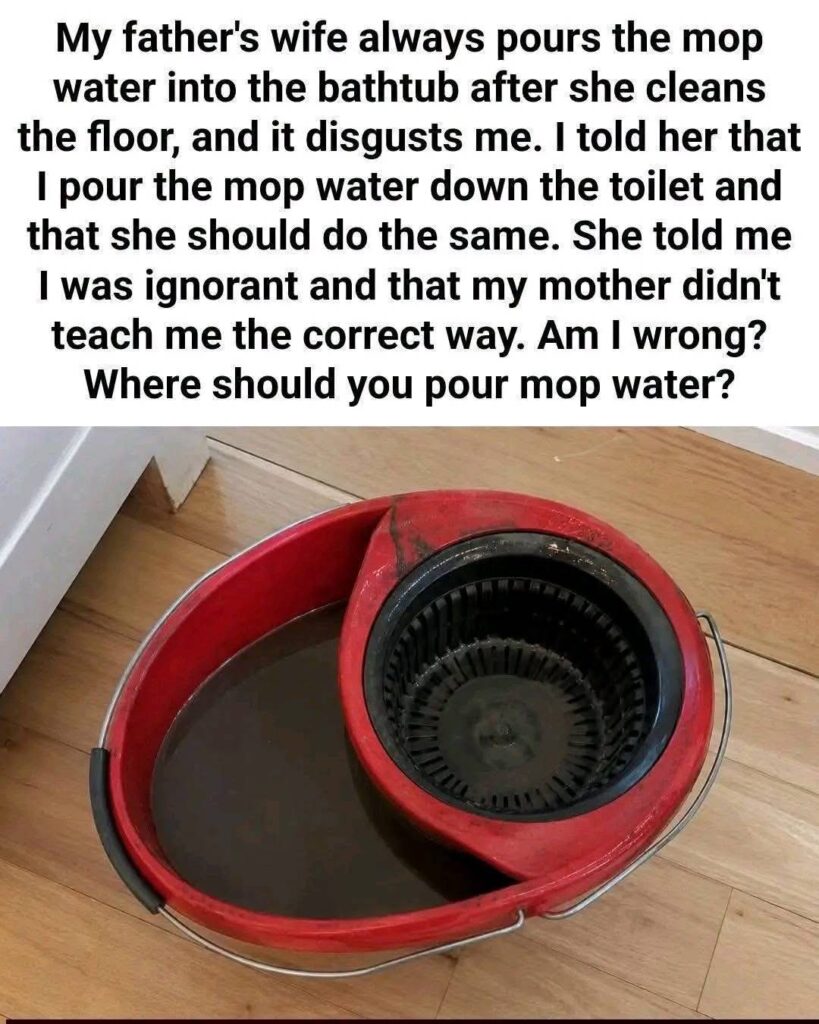
1. Why the Toilet Is the Ideal Choice
Designed for Waste: The toilet’s drain pipe is significantly larger (typically 3 to 4 inches in diameter) compared to a bathtub or sink drain (usually 1.5 inches). This allows debris, hair, grit, and thick dirty water to pass through easily without clogging.
Direct Disposal: Waste goes directly into the main sewer or septic line without coating surfaces you use for personal hygiene.
Easy Sanitation: Toilet bowls are built to handle bacteria and harsh cleaning chemicals, and they are quick to sanitize with a toilet brush after dumping.
2. Why You Should Avoid the Bathtub
Hygiene & Cross-Contamination: Bathtubs are where you clean your body. Pouring dirty water—containing floor grime, bacteria, dust, and shoes’ dirt—into the tub leaves behind a film of bacteria and residue on surfaces you touch.
Risk of Clogging: Bathtub drains have narrow pipes and traps that easily catch hair, dust bunnies, and debris from the mop water, leading to stubborn blockages.
Chemical Residue: Strong floor cleaners, strip waxes, or bleach left behind in the tub can ruin delicate porcelain, acrylic, or tub refinishing coatings over time.
3. Other Acceptable Disposal Options
If the toilet isn’t an option, alternative places include:
Utility / Slop Sink: Deep laundry room or basement sinks meant for household chores.
Gully Trap / Outdoor Drain: If allowed by local environmental guidelines (provided eco-friendly cleaners are used).
Tips for Dumping Mop Water Correctly
1. Pour Slowly: Lift the toilet lid and seat, then pour the water slowly directly into the center of the bowl to avoid splashes.
2. Flush Immediately: Flush as you pour (or right after) so heavy sediment doesn’t settle at the bottom of the bowl.
3. Quick Clean: Rinse the mop bucket with clean water, pour it down the toilet, and give the toilet a quick flush and flush-brushing if any residue remains.