
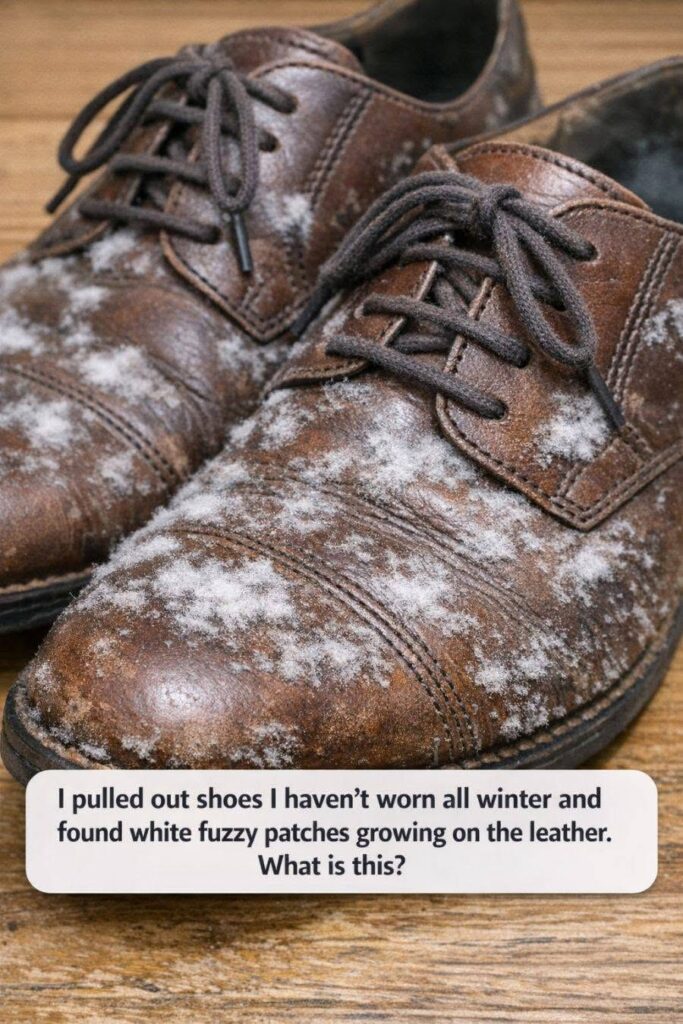
1. Mold / Mildew (Fungal Growth)
If the shoes were stored in a damp, poorly ventilated space over the winter, moisture and organic materials (like sweat residue or leather oils) create an ideal environment for mold spores.
Appearance: Fuzzy, spotty, or raised patches (sometimes turning greenish or gray).
Smell: A strong, musty “wet basement” odor.
Texture: Soft, powdery, or fibrous when brushed off.
2. “Fatty Spew” or Bloom (Natural Oils)
Sometimes, white powder on leather isn’t living mold at all. Tanned leathers contain natural fats and oils that can migrate to the surface and crystallize when exposed to cold temperatures or humidity changes.
Appearance: A uniform white haze or powdery film.
Smell: Normal leather smell (no musty odor).
Quick Test: Blow a warm hairdryer over a small spot on low heat. If it melts and disappears instantly, it is fatty spew (fats melting back into liquid oil). If it stays fuzzy and unchanged, it is mold.
How to Clean & Restore the Shoes
1. Clean Outside: Take the shoes outdoors so you don’t spread mold spores inside your home.
2. Brush Off Loose Growth: Use a dry, soft-bristled brush or a dry cloth to gently remove the surface layer.
3. Disinfect (If Mold): Mix equal parts white vinegar and water (or 70% rubbing alcohol and water). Lightly dampen a clean cloth and wipe down the entire leather surface to kill active spores.
4. Air Dry Fully: Let the shoes dry completely in a well-ventilated room, away from direct heat sources.
5. Condition the Leather: Vinegar/alcohol can dry out leather. Apply a quality leather conditioner or cream to restore flexibility and protect against future moisture absorption.