
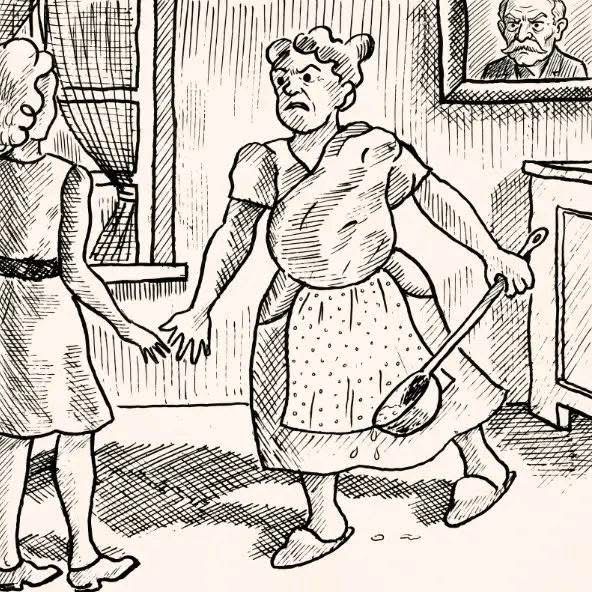
The air in the small kitchen was thick enough to cut with a butter knife. Martha stood near the doorway, her apron tied firmly around her waist and a large wooden soup ladle gripped tightly in her right hand. Broth dripped steadily onto the hardwood floor, but she paid it no mind. Her stern face was locked in a scowl, her eyes burning with intense frustration.
Opposite her stood Clara, reaching out a hand as if trying to soothe an unpredictable storm. Clara’s expression was a mix of hesitation and defensive worry.
“I was only trying to help adjust the seasoning,” Clara said softly, keeping her voice low to avoid escalating the conflict further. “The stew smelled like it needed a touch more salt and pepper, that’s all.”
Martha snapped her hand forward, gesturing forcefully with the dripping ladle. “This recipe has belonged to this family for three generations! My mother made it this way, and I have made it this way every Sunday for forty years. You don’t walk into my kitchen after six months of marriage and start altering what isn’t broken.”
From the wall above, the dark-framed portrait of Martha’s late husband looked down upon the scene, his painted mustache and stern gaze matching the heavy, uncompromising atmosphere of the room.
Clara took a small step back toward the window, pulling her hand in. She sighed, recognizing that this argument was less about a pinch of salt and much more about control, tradition, and the delicate boundaries between two generations sharing a home.
Key Elements in the Scene
The Conflict: A heated confrontation in a domestic kitchen, centered around cooking traditions and household authority.
The Ladle: A central visual focus, held aggressively while dripping soup onto the floor to highlight the sudden interruption.
The Portrait: The stern ancestor watching over the room, reinforcing the theme of strict family legacy.
The Dynamic: A classic clash of personalities between an uncompromising matriarch and a younger relative trying to navigate boundaries.