
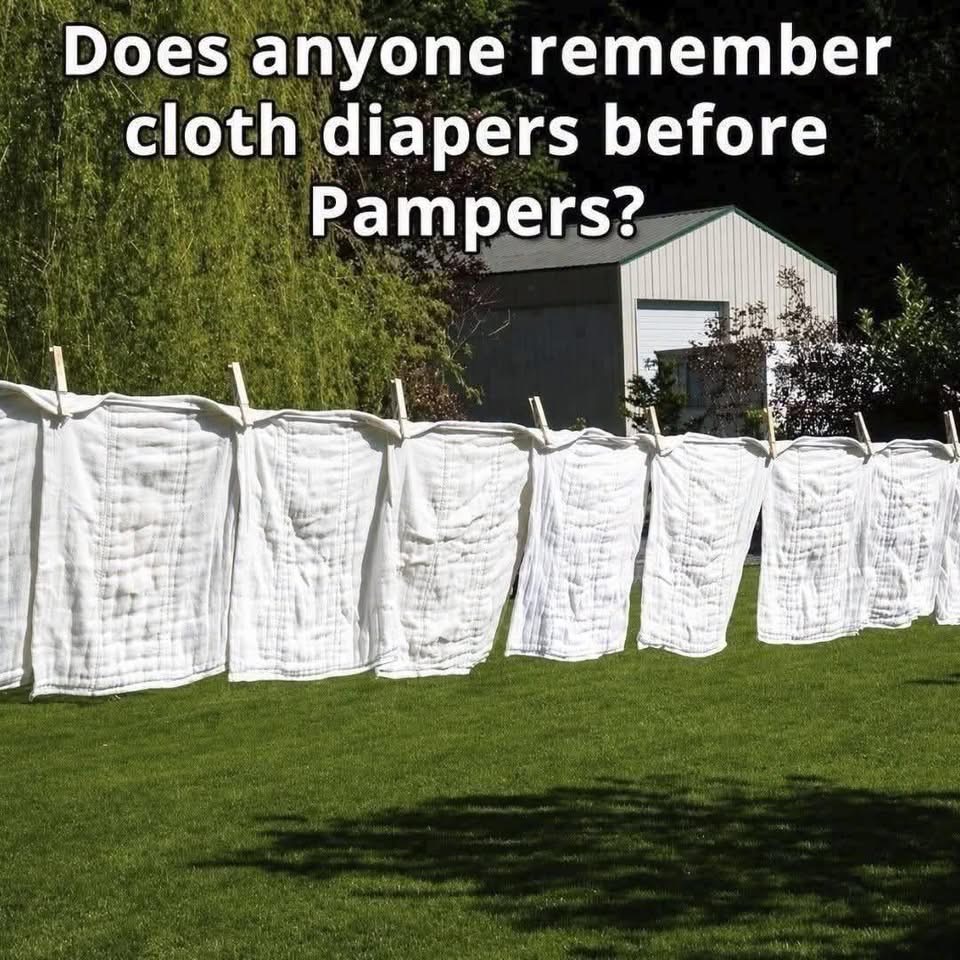
Before Procter & Gamble introduced Pampers in 1961—and long before they became a household staple in the 1970s and ’80s—parenting relied on reusable cloth diapers, safety pins, and outdoor clotheslines.
** The Cloth Diaper Era**
The Materials: Diapers were primarily made of heavy cotton bird’s-eye weave or flannel fabric, folded into rectangular shapes (prefolds) to maximize absorption.
The Fasteners: Safety pins—often with colorful plastic heads—were essential for securing the cloth around infants. Plastic, waterproof overpants (often called “rubber pants” or plastic bloomers) were worn over the cloth to prevent leaks.
The Routine: Managing cloth diapers required a strict washing schedule. Dirty diapers were soaked in a specialized diaper pail with sanitizing solutions before being boiled or hot-washed, then hung on the line to dry. The sun served a dual purpose: drying the thick fabric and naturally bleaching out stains.
** The Rise of Disposable Diapers**
While Marion Donovan invented the waterproof diaper cover (“Boater”) in the late 1940s and later developed an early disposable paper diaper, mass commercial adoption occurred in the 1960s.
P&G engineer Vic Mills led the development of Pampers, introduced in 1961.
The convenience of single-use diapers quickly transformed child-rearing, drastically reducing daily laundering time for parents.
** Modern Resurgence**
While disposable diapers hold the majority of the market today, cloth diapering has seen a modern revival. Today’s options feature adjustable snaps, pocket designs, and eco-friendly bamboo or hemp inserts, offering a reusable alternative without the need for traditional safety pins or rubber pants.