
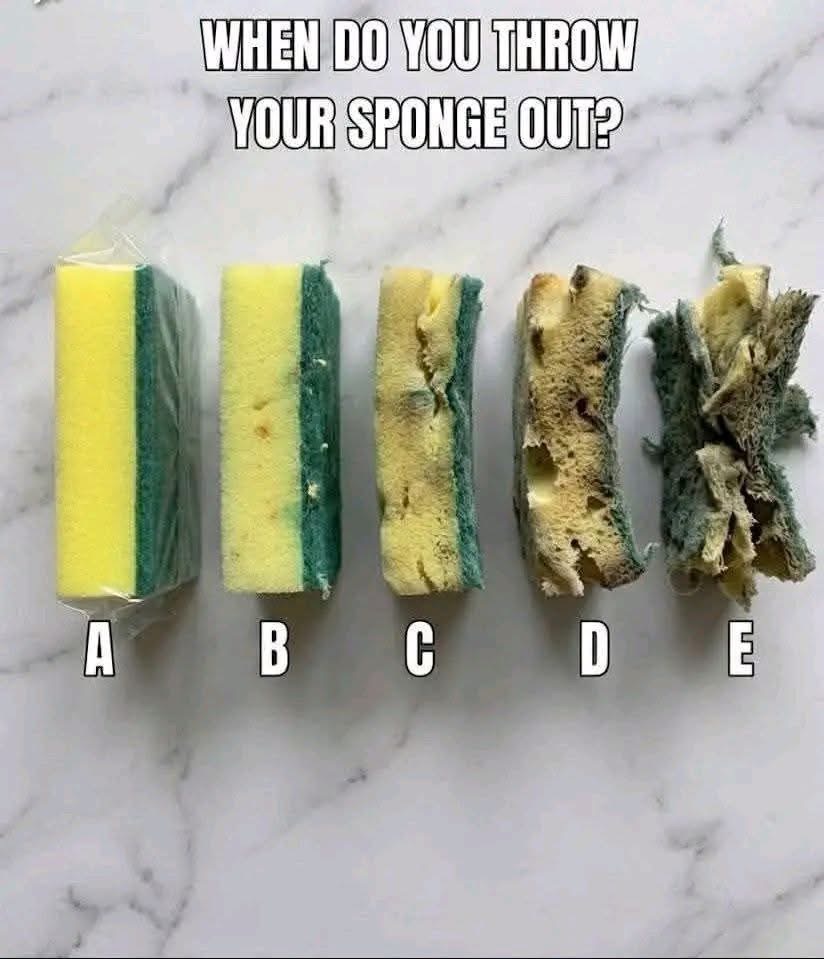
Sponge Breakdown
A (Brand New): Sealed in original packaging; pristine and unused.
B (Lightly Used / Retirement Target): Shows slight wear and compression. Most experts recommend replacing kitchen sponges every 1 to 2 weeks, making this the ideal window to toss or demote it to non-food cleaning (like trash cans or tires).
C (Toss Immediately): Visible wear, structural tearing, and dark spots signaling bacterial or fungal growth. Using this on dishes spreads germs rather than cleaning them.
D (Hazardous): Severely degraded, charred/stained, and crumbling. A major food safety risk for cross-contamination.
E (Biohazard): Shredded and moldy—belongs straight in the trash bin.
Rule of Thumb
Toss kitchen sponges every 1–2 weeks, or sooner if they develop a sour odor, feel slimy, or show visible tearing and dark spots.