
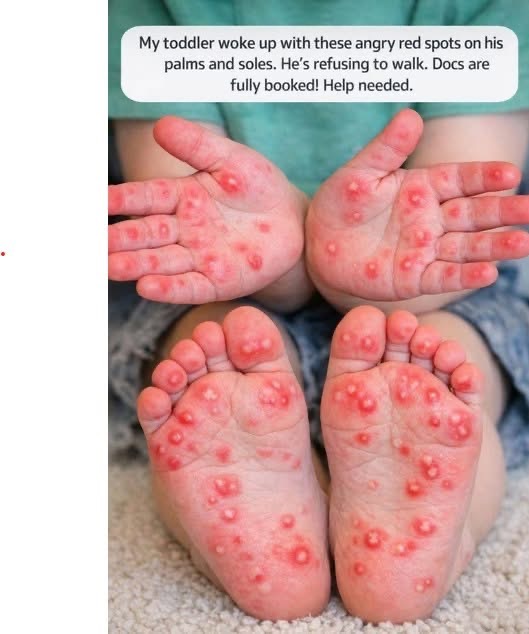
Key Symptoms to Look For
Lesions: Red spots or small blisters on the palms, soles of the feet, and inside the mouth.
Pain & Discomfort: Foot sensitivity leading to a refusal to walk, alongside fussy behavior or difficulty swallowing due to mouth sores.
Systemic Signs: Low-grade fever, runny nose, or decreased appetite.
Home Care & Symptom Relief
Because HFMD is a viral illness, it typically resolves on its own within 7 to 10 days. Focus on comfort and keeping the child hydrated:
Hydration: Offer cold liquids, milk, ice pops, or electrolyte solutions. Avoid acidic or salty drinks (like orange juice) that sting mouth sores.
Pain & Fever Management: Administer age-appropriate over-the-counter pain relievers (such as acetaminophen or ibuprofen) after consulting dosing instructions or a pharmacist. Never give aspirin to children or teenagers.
Skin Comfort: Keep the skin clean and dry. Avoid popping any blisters to prevent secondary bacterial infections.
Infection Control: Wash hands frequently and clean shared toys, as HFMD spreads easily through saliva, blister fluid, and stool.
When to Seek Immediate Medical Care
Even if clinic appointments are full, go to an urgent care center or emergency department if you observe any of the following warning signs:
Dehydration: No wet diapers for 6–8 hours, absence of tears when crying, dry mouth, or unusual lethargy.
High or Persistent Fever: A fever over 102°F (38.9°C) or one that lasts longer than 3 days.
Neurological Signs: Extreme drowsiness, confusion, irritability, a stiff neck, or unsteadiness/seizures.
Secondary Infection: Spots become increasingly red, warm, swollen, or ooze yellow pus.