
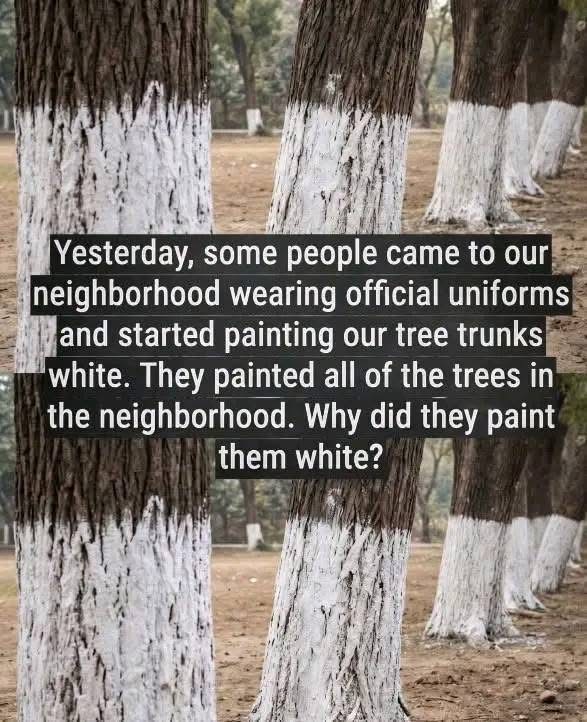
Municipalities and arborists paint tree trunks white—a practice known as tree whitewashing—for several practical agricultural, safety, and maintenance reasons.
Key Reasons for Painting Tree Trunks White
Pest and Insect Protection: The coating (typically diluted white latex paint or slaked lime) deters boring insects, beetles, and pests from crawling into bark crevices to lay eggs or nest. Lime coatings often contain anti-fungal properties as well.
Sunscald Prevention: Dark bark absorbs heat during sunny winter or early spring days, heating up the wood cells. When temperatures drop sharply at night, the sudden freeze causes the wood to contract rapidly, creating deep splits and cracks (sunscald or frost cracks). The white paint reflects sunlight and keeps trunk temperatures stable.
Bark Splitting Prevention: Younger trees or trees with thin bark are especially prone to bark cracking from severe heat exposure. White paint reflects thermal energy and keeps the bark cool during high temperatures.
Nighttime Visibility: Along roadsides, parks, and neighborhood streets, white tree trunks act as natural reflectors at night, making boundaries and road edges clearer to drivers and pedestrians.
Marking and Management: In public spaces, painting trunks signals that a tree has been inspected, registered, and treated by local forestry or municipal maintenance departments.